How ChatFirstWeb.ai Aligns with Google's Proposed Web Model Context Protocol (WebMCP)
An in-depth look at how ChatFirstWeb.ai integrates Google's WebMCP to improve AI interactions by providing structured, efficient, and reliable access to website content and tools directly within the browser.
Introduction
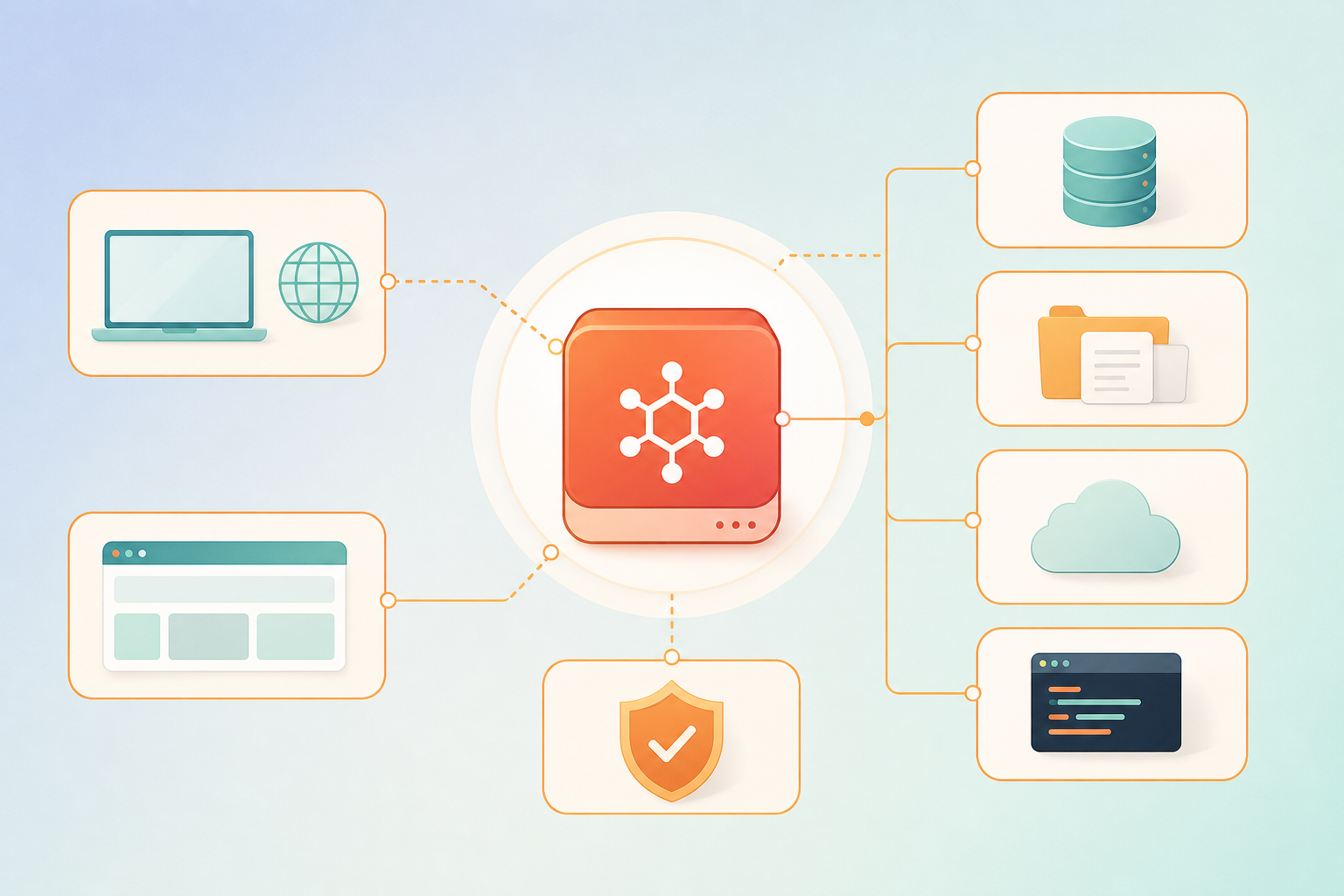
ChatFirstWeb.ai combines a remote MCP service with a browser-page integration based on WebMCP. They solve related but different problems. The remote MCP service makes site capabilities available to connected MCP clients. WebMCP lets compatible browser agents discover structured tools offered by the page a visitor has open. This article explains the distinction, what ChatFirstWeb.ai currently exposes, and the limits of this early technology.
Understanding WebMCP
WebMCP is an evolving web platform proposal being developed in the W3C Web Machine Learning Community Group, with editors from Google and Microsoft. It is a community group draft, not a finalized W3C Recommendation. The WebMCP specification and project describe an API for websites to expose named tools, descriptions, input schemas, and JavaScript functions that agents can invoke.
The current imperative API is exposed through document.modelContext. A site registers a tool with a name, a description, an input schema, and an execute function. A compatible browser agent can discover that tool and pass structured inputs. This gives the agent a clearer interface than guessing a page’s controls from screenshots or markup. It can make some interactions more direct, but it does not guarantee fewer tokens, eliminate errors, or replace the need for a well-designed page.
Two approaches at different stages
The current WebMCP draft specifies the imperative JavaScript API. A declarative approach for HTML forms is being explored separately in a draft explainer. That proposal describes attributes such as toolname and tooldescription, but it is still evolving and should not be treated as a settled, broadly supported standard.
Status and browser support
WebMCP is experimental. Chrome announced an early preview in February 2026 and a Chrome 149 origin trial in June 2026. Availability depends on browser version, enrollment, and experimental settings. Websites should check for API support and keep their ordinary experience working when WebMCP is unavailable.
ChatFirstWeb.ai’s architecture and WebMCP integration
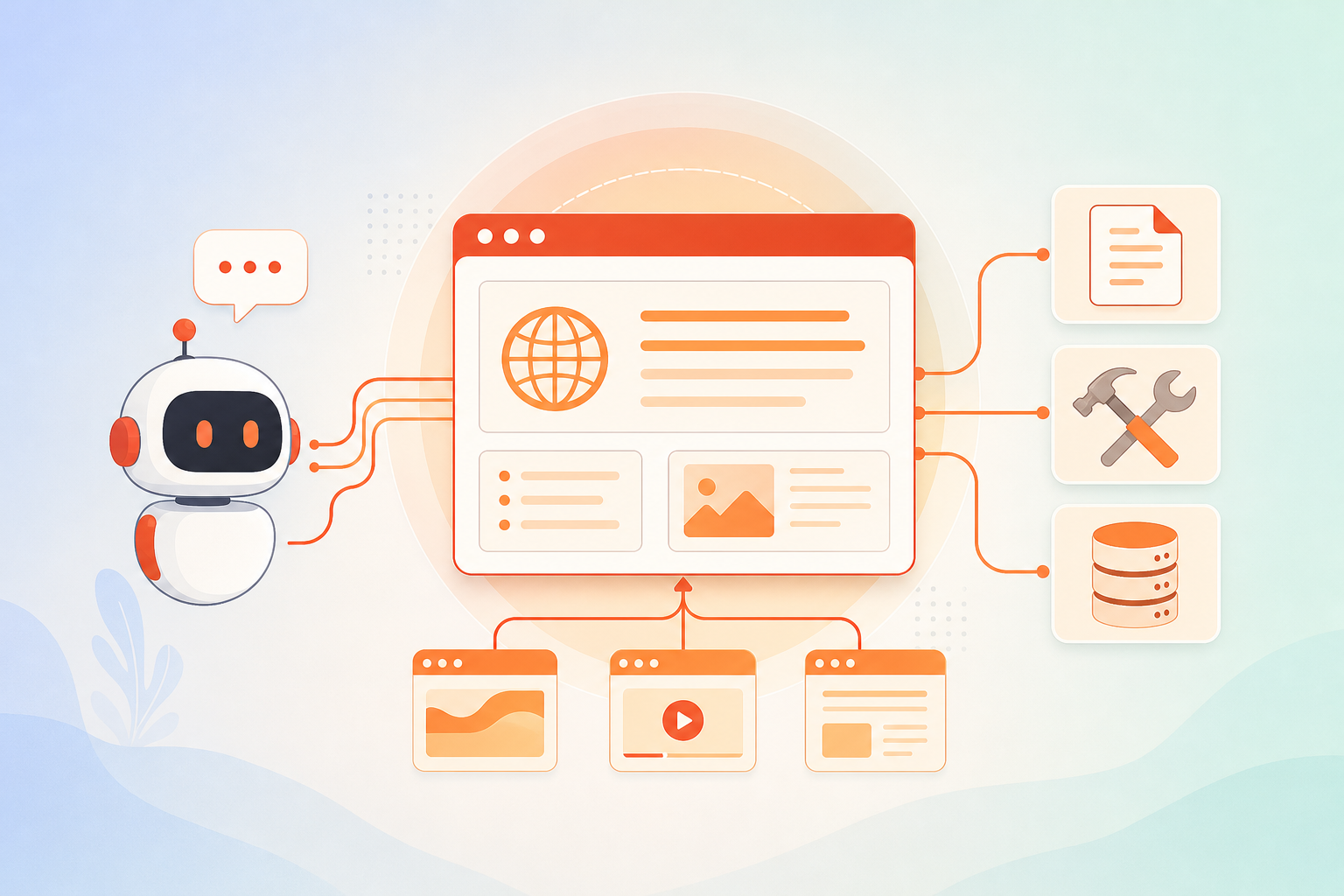
WebMCP adds page-specific tools for compatible browser agents. On published article pages, ChatFirstWeb.ai registers two tools through document.modelContext:
- get_page_context returns the current page title, URL, slug, and a short excerpt of the article.
- ask_chatfirst sends a question to the site’s configured chat provider, with the current article context where available.
The registration is conditional: if the browser does not expose document.modelContext, the tools are not registered. Draft previews are excluded. The browser integration complements the remote MCP service; it does not turn the page into a replacement for that service or make its tools available in every browser or MCP client.
Why the imperative API fits this page
The article context is specific to the page being viewed, and asking the site a question requires an asynchronous request to its configured chat service. Those behaviors fit the imperative API’s JavaScript execution model. A simple HTML form may be a useful declarative tool in the future, but it does not cover the full page-context and chat flow by itself.
What this integration can—and cannot—promise
Structured tools can make an agent’s available actions clearer and can reduce reliance on visual guessing for supported workflows. The benefit depends on the browser agent, the page, the tool schema, and the task. There is no general, verified 90% token reduction that applies to WebMCP, and structured calls do not make an interaction automatically reliable or safe.
WebMCP also does not remove backend work. In ChatFirstWeb.ai’s implementation, ask_chatfirst calls the existing chat service. The browser API describes and invokes page-level capabilities; the application still owns its data access, permissions, validation, and service logic.
Conclusion
ChatFirstWeb.ai’s WebMCP integration gives compatible browser agents a structured way to read the open article and ask the site’s chat a question. The remote MCP service remains the broader connection for MCP clients. Keeping these roles distinct lets us add browser-level interaction while reusing the site’s existing chat and publishing architecture.
WebMCP is still an experimental draft, so browser support and API details may change. The implementation should continue to feature-detect the API, offer a useful fallback, and avoid promising performance gains that have not been measured.